Monday, August 8, 2011

Law of the FEW

In the country of 1,2 billion people, how far it makes sense when we talk of  bringing about a change by handful number of people. Seems to be an oxymoron in the Indian context.But then to support the statement we have these over hyped instances like, the hunger strike by anna hazaare, the Posco project , that is taking the government for a ride and many more like these, sometimes really  make us ponder, does there  still exists in the world of billions the      " law of the few". Most of the revolutionary changes in the world have been brought  by these handful number of elements in the society who, drove the world crazy, leading the society to tip & then watched out for twists leading to an exponentially unbelievable climax.

World  wide the economists believe the revolutionary movements in society work on the Law of the Few.........mass revolutions have always been triggered by few.....there has always been a 80/20 theory in most of the things we encounter ...say for instance 80% of the work is done by 20% of the people, 80% of the beer in the world is consumed by just 20% of the people.....to add to the fact.. The theory applies itself aptly, when we zero in on the most talked about issue of the town...Sustainable development, though again sounds like an oxymoron, might tip after a point, when law of the few comes into the picture....
India’s position in climate discourse have always been the topic of debate, being the developing economy.  Corruption, over and ever exploding population,poverty , fluctuating economy, dynamic GDP and not to forget the targets we need to adhere to , to remain in tandem with the other developing economies ...and many more..actually highlights the ultra urgent need to work on the issues like climate change and Sustainable development. 
                                                                       
Historically many incidences state that the law of the few has worked only when the issues have been raised, fought to be worked out and have neared the tipping point, and eventually made  it tip in such a  way that it redefined new theories all together.
The point here i am trying to make is, we often wait for revolutions to arrive, considering the societies at large, and seldom identify the power of few. A sensitive issue like Climate and Sustainability can no more remain subjective.It essentially has multiple dynamics associated with it & needs a bottom up approach, beginning with few masterminds, working on the issue and disseminating the approaches for the world to follow.But then the paradox of the situation is such that, there are too many masterminds and no one to follow, and thats exactly what brings the whole discourse to a stagnancy, and compels us to question,  will the rising issues,in india actually this time override the law of  few? Or will it still continue to lay the same impact in this whole climate discourse?

Wednesday, July 6, 2011

No costs attached....

I often wonder, do we really have to value only things which come with a price tag? Are priceless things less valued than one with those having them? The entire issue of global warming, climate change exists today ,probably just because there is no cost attached to the use of atmosphere, there is no cost attached to the extent to which our earth is exploited and also, there is no cost attached to the knowledge of traditional practices which are no more trickled down generations, which carry trillions of essentials along with them . We are incidentally allowing this treasure, simply vanish away from our hearts and minds.
                                            Natural Rainwater Harvesting Pond in Barmer

The unbridled neglect of resources, traditions and knowledge is one of the chief reasons, why we are falling short of all of them today and are craving for more. But still that doesn’t stop us from exploiting them. Again, just because there are no costs attached.
I recently happened to explore few villages of Thar desert. Climate has always been harsh in the western Rajasthan, Its just the close proximity of the poor farmers in the region with the environment, their faith in the same and extreme dependency on nature made them value it more and was thus, an inseparable part of their lives. Be it agriculture, be it the traditional rainwater harvesting structures or be it the common property resources, all had CLIMATE ,as the governing factor for their existence. People fostered them, just because they were conversant with the unpredictability of the climate and its resultant consequences.


Today, the tradition is dying. With the advent of technology, Rajasthan is entirely losing out on the base of its tradition. Tractors have taken over traditional animal power practice, the concrete water tanks and piped water supply is very much responsible for the defunctness of the traditional water harvesting systems, Accessibility and affordability is taking the community away from the environment, which some time back formed their identity.
Who is at fault for the same? Is it the Technology? Or our attitude towards it ? The answer to this lies in both. With the interventions in technologies, advances in practices, our traditional wisdom is demoted. There is a tremendous squabble between the modern technology and traditional practice with a total lack of balance. 

I personally feel, with the increase in the scales of  the systems, the pace at which we need to cater to the demand, technology is  a must , but then if it is in tandem with the traditional practice, then the combination of the two would create wonders. The deeper the roots are, taller the tree grows, the more the bow is stretched back, farther the arrow moves. So may be our modern approaches might take us way ahead of time, provided we parallely value what we have left behind. Development is not just burying the traditional wisdom, but approaching it with a novel perspective, and valuing it as it deserves.
Photo courtesy : 
Prachi Aswani   & Rucha Dande

Saturday, May 28, 2011

The Social meanings of Climate Change-Rajasthan calling....


The colors of the PAGADIS, the flash of the shining deserts, the wonderful dahi kachauri and lots more precisely defines the “ Rajasthani culture”

"Padharo mare des:” is very aptly phrased. 

It essentially highlights the willingness of the rajasthanis to offer immense hospitality to their visitors. They flatter you with their offerings .
Recently as a part of our training we got an opportunity to understand the economically and socially backward community of rajasthan and their resilience to climate change. IN the pursuit of achieving our targets, i also unknowingly started seeing something that was intangible , hidden, yet very prominent. Something that forms an inseparable part of their lives. Something that we never thought we would study , but actually forms a core backbone of our study, and that’s the sense of contentment amongst the people to the situation , their ways of living. We had been to the villages of barmer meeting the people there..
Unbearably extreme weather conditions.........
seamless boundaries of deserts..............
no life services....
All that the community had , was a "a big curve that set things straight "  - thats their beautiful smile. Immense sense of contentment.
No food to eat, but dozens to offer...
Counting the drops of water, yet no regrets to put forward....
“Take life as it comes to you “ is what forms the baseline of their actions today. Adversity is something that they have learned to live with. Poverty, Ignorance and struggle governs their lives Happiness, contentment and hospitality shapes their lives.

They live the most sustainable way. All the buzz that we talk about sustainable living is, what can be seen reflecting in the ways of living of these people.
Global issues like climate change has shaken the world today. Green thinking, behavioural changes, integrity with the nature, climate responsive architecture....a live demonstration of all these can be seen in the villages of india...

Its our tradition...that we need to go back to....
Its our treasure that we must learn to value....
Climate change is unequivocal..also, the way we look at climate change differs as per the regions and states.Our different social contexts shape the way we look at things.
Rajasthan visit made me experience the social meanings of climate change..it made me realise more profoundly , that our answers to climate change are already been thought of, its just we need to go back an unfold them. It lies somewhere in these experiences that we often forget paying attention to......!!!


Photo courtesy:Prachi aswani
                       Rucha dande

Sunday, April 17, 2011

Strange analogies


Riding the tsunami of popular public support against corruption, our Anna Hazare has sent a giant wave of warning across the country triggering the minds and hearts of every Indian...against CORRRUPTION....his hunger strike and immense determination to raise a voice against corruption, is what is imperative to development today. Invariably corruption is slowly eroding the system & the entities belonging to it. The poison is slow,  but is capable of having catastrophic effects if not addressed at the right time in the right way...by right people...
Slightly drifting from this issue, let’s take another buzz word/issue Climate change, global warming, which is not the concern of India alone, but of the whole world.  To stress the gravity little more....its the issue of the entire planet.....the only planet we have...!!!!! When i ponder upon these issues, there are few analogies which i can find with corruption and climate change...
Both climate change and corruption appear to be very slow & dormant but are very powerful in their impacts , and get disseminated across the sections. Both need a revolutionary approach in order to suppress their otherwise devastating aftermaths...addressing climate change issues is no more a choice but its an imperative. Millions of lives are at stake, with the approaching tsunami of destructions,  which we will be exposed to.
The rising emissions, our lifestyles, our modern society & our demands which have surpassed their benchmarks are all the endproducts of our bad practices and the absolute casual approach with which we are treating this issue  apparently...The rising mercury is an indication that our ignorance will make us pay heavily for our deeds..
Parallel to this is our development and its friend of all good times......corruption.....they hold  a very strong relation...
Both need each other for their survival & sustainance.
Instances like Adarsh scam, Mumbai, Environmental clearance for Nirma factory at Bhavnagar, despite its sensitive location, & violation of norms makes it clear that curtailing corruption is unequivocal also depicts its power to corrode the entire system..
So the bottom line is Climate change and corruption have already found their ways in.....the only way to  show them way out, is to bring about the change in oneself. Common to both is ,change in our behaviours, our attitudes...alterations in our ways of living.....The solutions to these problems are certainly not any rocket science, but if not addressed timely may appear more complicated than the same ....out attitudes, the way we look at things & our behaviours all together will make this change happen. But definitely the simplest of all is the toughest to internalise.....once that is done probably we will no more require great personalities like Anna Hazare &  many other activists like him to stress themselves with strikes, no violations wil head the news....its just,  it needs a beginning...it just needs a realisation....a realisation enough to bring about that change required.... !!!! The only common thing is to be the change one wants to be....

Wednesday, March 23, 2011

Rethinking NUCLEAR..!!!

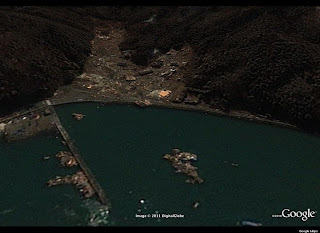
                                                                Japan- Before Tsunami

                                                                  Japan-After Tsunami

There are growing calls in Europe for nuclear power to be reassessed and possibly dumped. There are 150 reactors in use within the EU, and replacing them with conventional fossil-fuel based power. Switzerland has put three planned plants on hold and Austria wants a new safety regime for all European reactors.

With the array of disasters hitting JAPAN and devastating every nook and corner of the country, leaves us with a strange but true query...What is that, calls for an urgent need?   “development or clean development.” With the nuclear disaster hitting japan , what can we say? Does clean energy come with such a  huge price TAG ? But then Nuclear being the most clean energy today, in the context of the overarching emissions, where will our decision to rethink nuclear as against conventional one lead us to? What about our protocols and pacts ....what about our reduction targets? Can we, as a developing country afford to not go NUCLEAR?

All these questions may sound hard hitting, but then they need to be addressed. The scale and magnitude of natural disasters are any how out of any one’s reach. So foreseeing them should we not try and take steps to adapt to it? Or shall we place ourselves in a more comfortable situation of not being called as sustainably developed country...??


Emissions are always going to get worse before they get better, and industrialisation of the developing world is where most of this blow-out is occurring.

As per my perception, rethinking nuclear is no solution. Instead we as a country need to attempt to resolve some fundamental issues like , what kind of safeguards should we build to protect ourselves against these high risks (like Japan’s earthquake and tsunami combined)?Another question is: what if we are not nuclear and how long we can afford to be the same?

Also what about the risks & vulnerabilities of the communities placed around? I guess one can just go on when we are on the other side....but then having said this, it does not exempt us from answering them too...!!!!
Probably in the light of japan’s nuclear disaster , one can easily deduce that the strength of the Nuclear realm lies in safeguarding communities and still provide them the clean energy & not opting to choose either of them

Thursday, March 10, 2011

Ambitious or Ambiguous???

 
Click to enlarge 

Rs. 200 crore  proposed to be allocated for launching Environmental Remediation Programmes from National Clean Energy Fund.
Rs. 200 crore proposed to be allocated for Green India Mission Sarva Shiksha Abhiyan Rs. 21,000 crore allocated, which is
  40 per cent higher than Budget for 2010-11.
 
All the facts , all the realities are lost in figures...!!! Where do we find the reality then? In the interiors of india...??? Ooops still to say..
.The "Bharat".. 
Whatsoever is our pace of development, whatsoever would be the numbers , however Big may be the amount declared for the future development ...the question still remains  
are we really developing sustainably?  Or we are just trying to be the mirror images of the West?

                                                                      Click to enlarge 

When i was reading the budget, atleast for the sake of it..i was satisfied to see the
CLIMATE CHANGE & ENVIRONMENT  to be mentioned as a separate identity, with an intention of treating it one. If we are saying we are developing , why are we still known to be a third world country ? Why are still BHARAT and INDIA as two varied entities..though we are geographically one?

The budget does seem to be
ambitious . It hypnotizes us with the  ambiguous picture of development. But then if that is the case where is Environment vanished from the whole drama?
Ironically speaking.... I would be more than happy to hear that “ i must have not read the budget properly”.....!!!! 


With the Himalayas retreating due to the warming, with the heat waves killing people in larger parts of the world, with the floods & tsunamis knocking at our doors, still can we continue developing without considering the environment?


Then why is it so, that our government begins to shiver when it comes to pen down the facts & figures about the catastrophic situation we are in? Why do  
sustainable/ environmental aspects   are still fidgeting to find a place in the such a significant document like BUDGET???
                                                                     Click to enlarge


Declaring hefty cash subsidies is not the end of the game? Wether the amount reaches our poor farmers or not? The budget appears to show a concern about the  
agrarian INDIA , about the farmers, but then is it not invariably necessary to  monitor  the transfer of the same? 

We have all the state of the art malls but no electricity ...we have the entire of real estate booming..inviting huge investments but no infrastructure in place...we have multidimensional ambitions five year plans for development but never seen the dawn of reality due to corruption...we are 30% urban today and soon to be 60% without having solutions and facilities for the large chunk of the urban poor & their vulnerabilities?

  
With all these do we still have the right to even talk of development without addressing the fundamental errors?
So the budget for me still lies as only  
a well presented speech  which completely undermines the environment and core issues of  sustainable development..